
Current task
ReStory: Chill Electronics Repairs shop operations
Evidence-backed player reference for ReStory: Chill Electronics Repairs covering shop operations, with version, source and media boundaries kept visible.
Read the shop as a working place rather than a decorative backdrop: orders arrive, parts cost money, the landlord is a named character, and room changes sit beside the repair queue. The page keeps business facts tied to the mid-2000s Tokyo setting. Its route map connects the counter, browser, bench, and customer records into one shop rhythm.
Current task
Understand orders, finances and shop-facing systems.
Understand orders, finances and shop-facing systems.
Working view: full-release-1.0.009r · captured
The Akiba shop route is about the place that makes the repair loop possible. ReStory is set in mid-2000s Tokyo, and its published shop description combines customer intake, repairs, finances, growth, room decoration, and social choices. That means the store is both a technical workplace and a living setting: the counter receives requests, the bench turns them into repairs, and the room changes as the business develops.
Use this page when you want to understand the business side without separating it from the player’s daily rhythm. It explains what the captured sources establish about orders, money, customization, the landlord, and the atmosphere around the CRT-filled shop.
The counter is the shop’s intake point
The store loop begins with a request. The official product text distinguishes in-person orders from online orders, which gives the shop two visible ways to meet customers and receive work. An in-person request emphasizes conversation and the physical counter. An online request emphasizes the in-game web browser and the practical act of finding parts or managing a job through a screen. Both channels feed the same repair business.
A player can use the counter as a planning space: identify the device category, listen to what the customer wants, and decide whether the job fits the tools and resources currently available. The published sources do not provide a complete queue algorithm or a fixed daily schedule. They do provide a clear loop in which accepting work, repairing devices, and looking after the shop are connected decisions.
The counter also provides the first filter for attention. Separate a request that needs physical bench work from the conversation or online context surrounding it. That distinction keeps customer stories visible while giving the player a concrete next action: identify the device and open the appropriate record. The counter is therefore a handoff point between dialogue, device recognition, and the practical work that follows, rather than a decorative entrance to the shop.
Finances give repairs a business shape
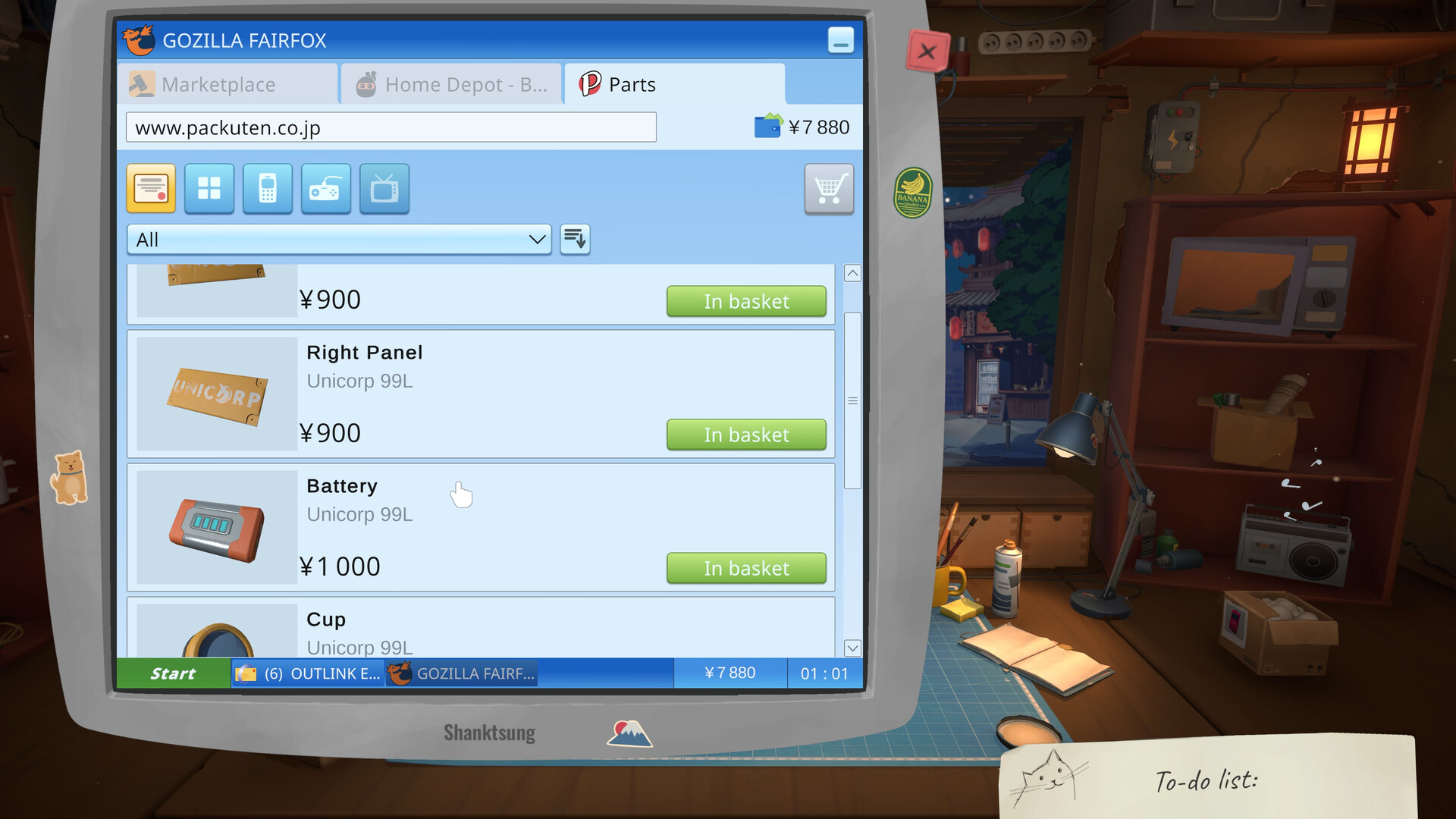
The official description includes finances and shop growth, so money is part of the setting rather than a decorative number. The parts browser screenshots reinforce that relationship by showing listings alongside a wallet-like shop interface. A replacement is therefore both a technical answer and a business purchase. Thinking in those terms helps a player understand why the browser belongs on the same route map as the repair bench.
The captured material does not publish a full price table, profit formula, or guaranteed early-game budget. It is safer to use the available information as a decision frame: know what the request requires, look at the part source, and keep the broader shop state in view. Do not mistake the single observed US price for an in-game repair cost; the price observation belongs to the Steam store product, not the shop economy.
Money is best read as a shop-state signal, not as a fabricated optimization puzzle. The captured screenshots show the wallet beside parts listings, while the research only preserves a dated Steam product price for the US market. The route keeps those two kinds of money evidence apart.
Growth changes the room as well as the workload
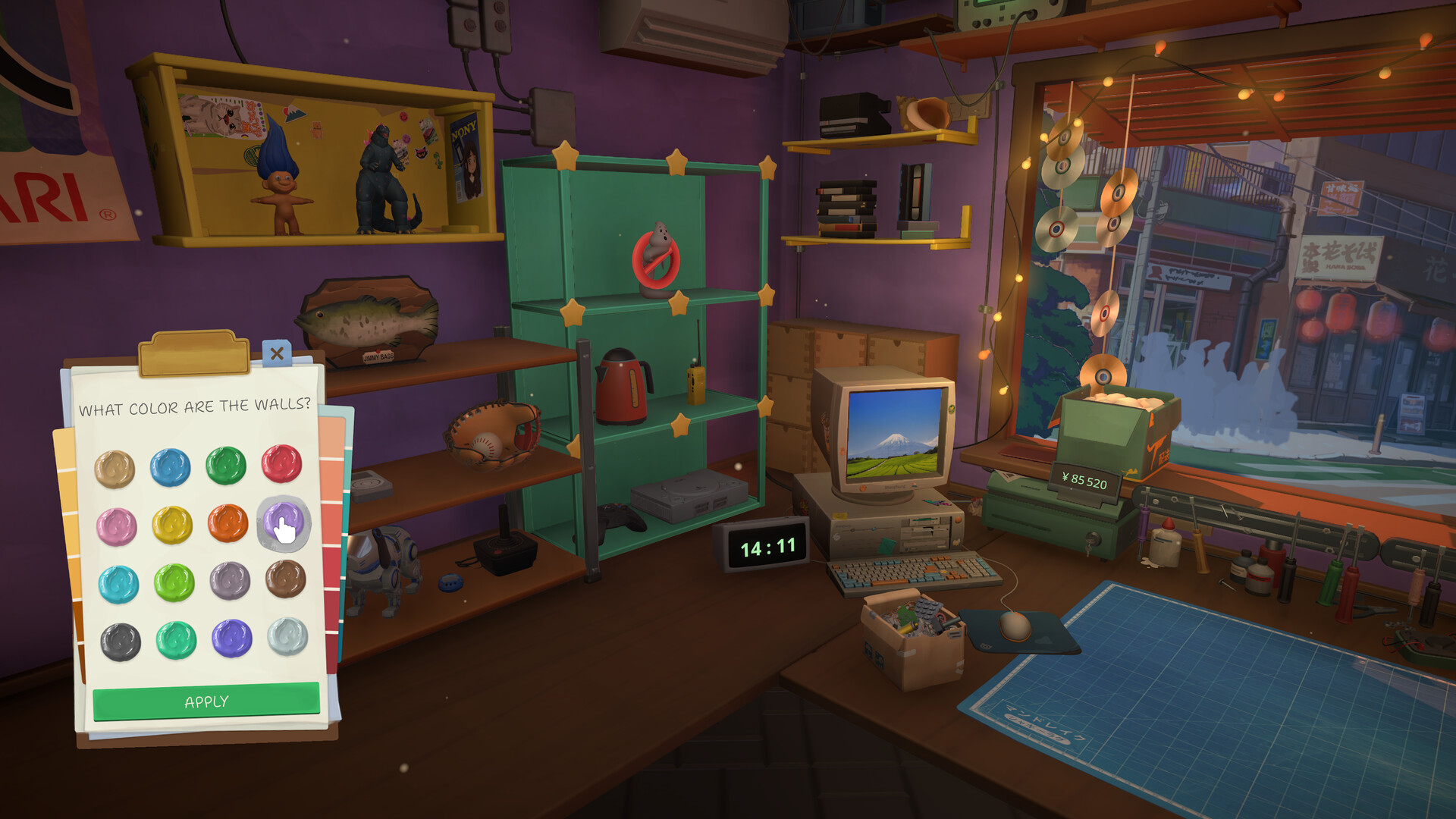
Growth in ReStory is described through shop development and customization. The player can use an airbrush, a color palette, and room decor, while official screenshots show interior views with CRT equipment and changed wall colors. These details make progression visible in the workspace. A repair shop can feel more personal because the room records what the player has earned and how they want the workplace to look.
Cosmetic decisions still sit beside practical work. Paint and decor can express the shop’s identity, but they do not replace disassembly, cleaning, replacement, or assembly. Keep both sides active: let the room show progress, then return to the counter for the next request. The sources support this combination without specifying a single optimal style or a mandatory decoration path.
Growth becomes legible when the same room carries both work equipment and personal choices. CRTs, shelves, wall color, an airbrush, and a palette belong to the visual record; no captured source establishes a complete unlock order. The player can therefore read customization as progression without a made-up checklist.
Hashimoto Genzo anchors the setting
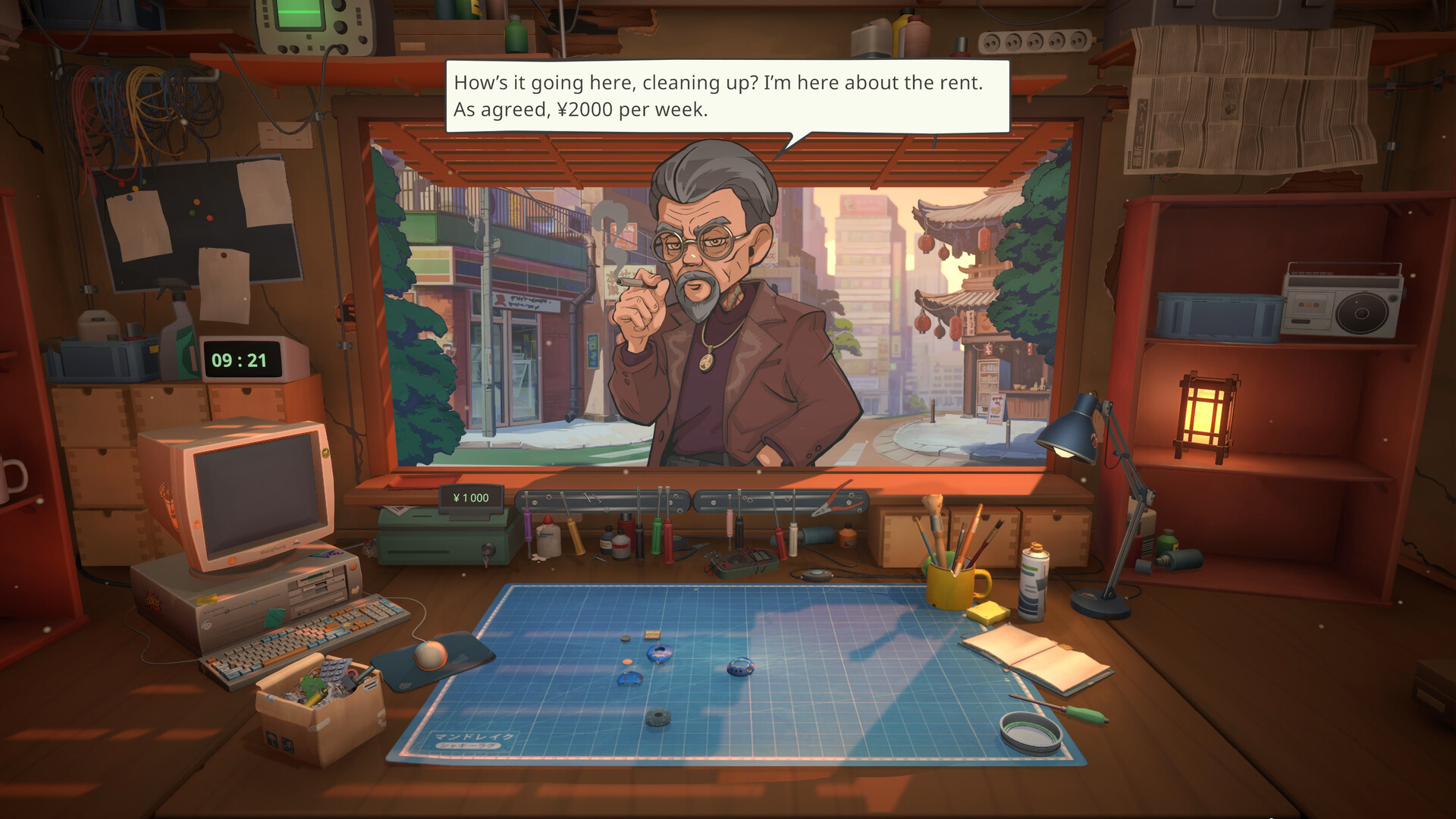
Hashimoto Genzo is recorded as the landlord, with an age range of 58–62, a November 3 birthday, a preference for grilled street food—especially chicken skewers—and bonsai cultivation. His favorite game is Beach Head (1983). Those details make him more than a rent prompt: he is a named person whose interests sit within the same retro-electronics world as the shop and its customers.
The character record does not provide a full relationship guide or a guaranteed conversation outcome. Use the details as recognition cues when he appears, and keep his landlord role distinct from the customer records. This route can explain why the shop’s rent and room matter, while the customers route handles the requests and choices that arrive at the counter.
Genzo’s record gives the shop a named relationship with a practical role. His landlord status, age range, birthday, food, hobby, and favorite game are fields for recognition, while rent and conversation outcomes remain separate questions. This keeps a character fact from becoming an unsupported management formula.
A calm shop still has a working rhythm
The selected interface echoes an after-hours workstation because the game’s strongest identity is a quiet repair desk: a warm room, a screen, a device, and a list of things to finish. The player’s loop moves between physical repair and social or financial decisions, so an orderly route map is useful. Read a device record, open the repair bench, check the browser, and return to the shop when the job is complete.
That rhythm is also why the game’s mid-2000s setting matters. CRTs, browsers, older game hardware, and the physicality of a small local shop create one coherent time and place. The sources do not require nostalgia as a play style, but they do show a world where a repair counter, a web browser, a wallet, and customer stories can all belong to the same evening.
The workstation mood works because every object still points to a task: a request, device, part, tool, source, or room change. The route map follows those relationships instead of adding a generic dashboard layer, so a player can move from atmosphere back to a concrete repair decision.