
Current task
ReStory: Chill Electronics Repairs customers
Evidence-backed player reference for ReStory: Chill Electronics Repairs covering customers, with version, source and media boundaries kept visible.
Customer stories add a social layer to the repair request. Use the named fields to recognize seven captured characters and the choice boundary to understand why this route explains context without pretending to contain a complete ending chart. The parent page keeps the character table broad, while Baketsu has a separate record for its online-retro identity.
Current task
Read named customer-story evidence and branching-choice limits.
Read named customer-story evidence and branching-choice limits.
Working view: full-release-1.0.009r · captured
ReStory’s customer stories give the repair shop a human rhythm. The official character material names seven figures with roles, age ranges, birthdays, favorite foods, hobbies, and favorite games, while the store description says that customer stories, branching choices, and multiple endings are part of the experience. This route presents the named records and explains the limits of what the captured material can tell a player about outcomes.
Read it after the first shift if you want more context for the requests arriving at the counter. The character list is structured data, so names and fields remain easy to compare instead of disappearing into a long narrative.
A repair request can carry a story
The shop loop is not only accept, fix, and collect. The official product description places customer stories and choices beside the repair work, which means a device can be a reason for a conversation as well as a technical object. In-person and online orders give the shop different ways to meet people, while the repair stages give those conversations a physical setting.
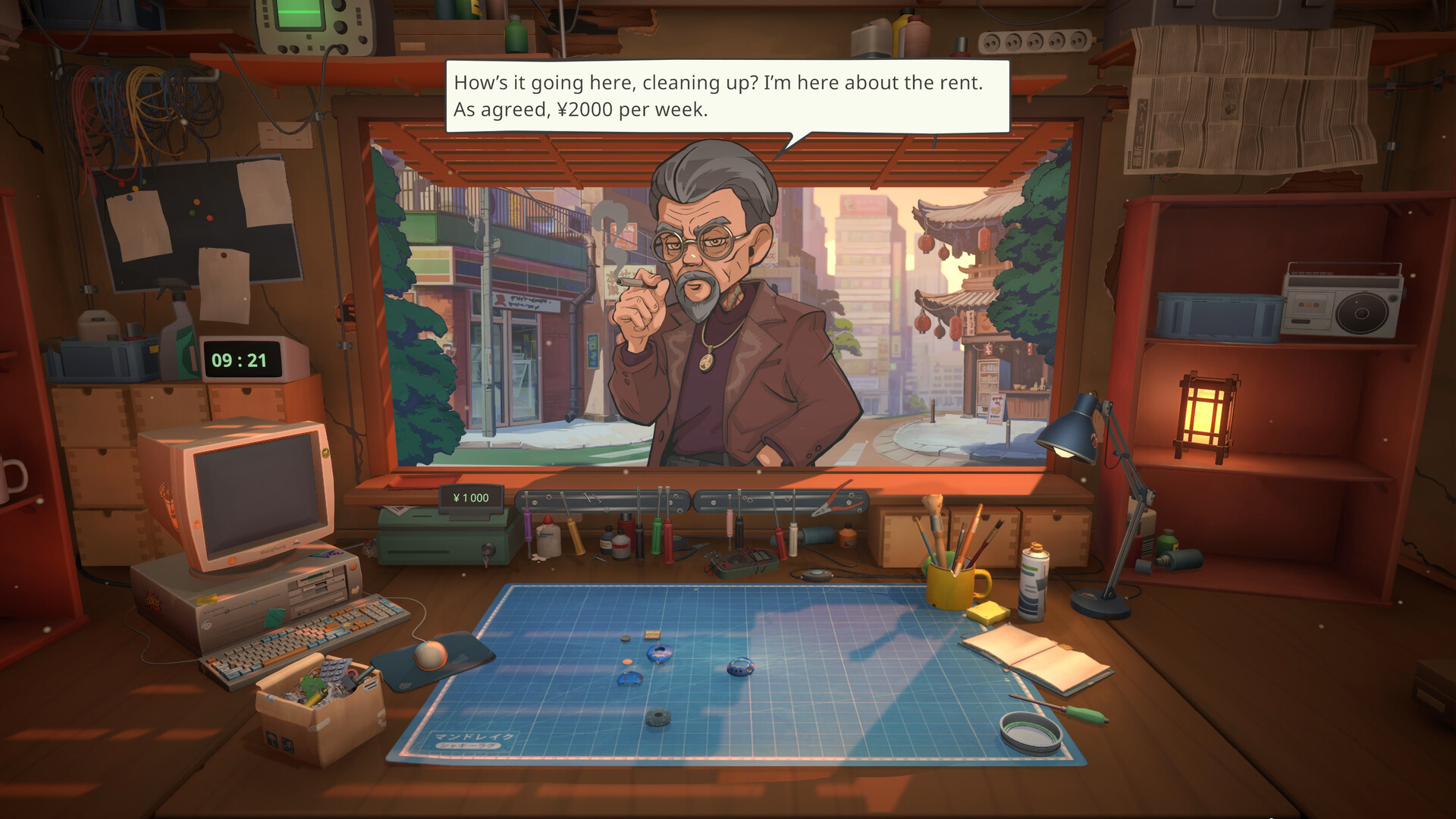
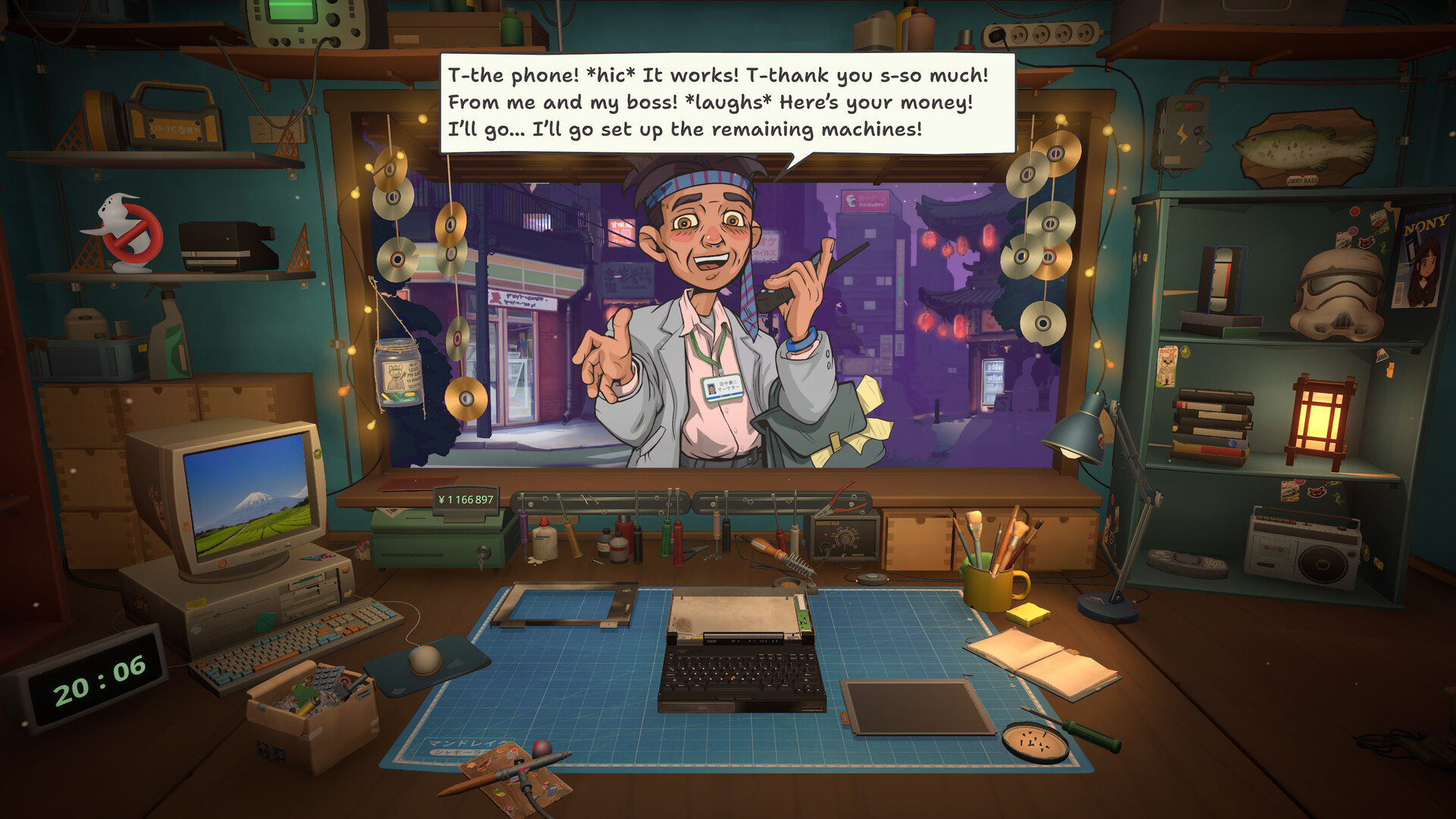
The captured character records make that social space concrete. Hashimoto Genzo is the landlord; Yamato Takeru is a courier; Sakamoto Kenji is an inspector; Suzumi Haruhi is a hostess; Hoshino Yui is a little girl; Aoyama Takumi is a rival repairer; and Baketsu is a mysterious online Pac-Man champion. The roles are strong navigation cues even when the full story path is not published.
The seven named records make the social layer searchable rather than vague. A role, hobby, or favorite game can help identify a character when a request returns to the counter, while the repair stages explain why that person is present. The page keeps both strands connected. This separation is useful during a playthrough: the character fields answer who is involved, while the work order and device routes answer what the shop must do next.
Branching choices have a confirmed boundary
The sources confirm branching choices and multiple endings, but they do not provide a complete decision tree, a route-by-route ending map, or a guaranteed response for every customer. That is an important limit for a player-facing guide. It is safe to say that choices matter to the story shape; it is not safe to assign a secret outcome to a specific line without a captured source.
For a first playthrough, respond to the person and the request in front of you, then note the choice you made if you want to compare a later run. The structured records help you remember who appeared and what they care about. They do not turn a personal choice into a solved flowchart, which leaves room for the game’s own discovery.
The safest play note records the decision itself and the context around it, not a guessed result. Write the customer, device, channel, and response, then compare a later run if needed. That method respects the confirmed presence of branching choices without manufacturing an ending map.
Use the fields as recognition cues
The records include small details that help distinguish customers. Genzo’s bonsai cultivation and grilled street food fit his landlord role. Baketsu’s anonymous retro-game blog matches the mysterious online identity. Yui collects keychains and figures, while Takumi repairs mechanical watches. Those details make the cast readable at the counter and keep the character list connected to the game’s interest in old devices and personal memories.
The age ranges and birthdays are part of the published record, but they are not presented here as a dating system, a hidden stat, or a promise of a specific conversation option. Use them as reference fields. If a route later adds a verified dialogue consequence, it can be attached to the named record without rewriting the basic character identity.
Small fields are useful because they distinguish characters who occupy the same shop world. Genzo’s bonsai, Yui’s keychains, Takumi’s watches, and Baketsu’s blog are recognition cues, not stats. The table presents them as stable record values so the player can find the right story context quickly. Use a field to confirm a character identity, then return to the published route context rather than treating a hobby or favorite game as a hidden gameplay modifier.
Baketsu links online play and shop stories
Baketsu is recorded as a mysterious online Pac-Man champion, aged 19–22, with an November 11 birthday, omurice as a favorite food, an anonymous text blog about retro-game bugs and reviews, and Katamari Damacy as a favorite game. The record also has two official store images bound to the character route. This makes Baketsu a natural bridge between the shop counter, the in-game web context, and the story route.
Open the Baketsu detail page for the fields in a compact record. The page does not claim that the blog title, Pac-Man skill, or favorite games unlock a particular ending. It records a character whose online presence is part of the captured identity and lets the player carry that context back to the repair shop.
Baketsu’s record ties the customer route to the in-game web atmosphere through a named online hobby. Read the character fields first, then use the browser route for the shop system itself. The connection is supported by the captured identity and images, not by an inferred dialogue sequence.
A useful way to track a playthrough
Keep a simple note for each important request: customer name, device, request channel, repair stages completed, and the choice made in conversation. This mirrors the game’s actual relationship between technical work and story decisions. It also gives you a way to compare runs without relying on a fabricated universal route guide.
The game’s main story is reported as more than 15 hours, with the exact time varying by player. That duration leaves room for customers, repairs, shop growth, and multiple endings to unfold together. Use the named catalog as a memory aid, then let the shop’s own conversations determine what your particular run becomes.
A playthrough log also makes the evidence boundary useful. Mark the request channel and repair stages alongside the conversation choice, then leave the outcome as an observation from your run. The official material gives the game room for multiple endings without supplying a complete spoiler-safe route chart.
Seven named character records
These rows preserve the captured character fields and keep recognition details separate from the branching-choice system. They are a bounded record set, not a complete dialogue or ending chart.
| Name | Role | Age range | Birthday | Favorite food | Hobby | Favorite game |
|---|---|---|---|---|---|---|
| Hashimoto Genzo | landlord | 58–62 | Nov 3 | grilled street food, especially chicken skewers | bonsai cultivation | Beach Head (1983) |
| Baketsu (Bucket) | mysterious online Pac-Man champion | 19–22 | Nov 11 | omurice | anonymous text blog about retro game bugs and reviews | Katamari Damacy |
| Yamato Takeru | courier | 19–22 | Nov 28 | onigiri | restoring old bicycles | none stated |
| Sakamoto Kenji | inspector | 38–43 | Jan 4 | katsudon | listening to police radio | Leisure Suit Larry |
| Suzumi Haruhi | hostess | 19–21 | Jun 2 | tamagoyaki | repairing and disassembling devices | none stated |
| Hoshino Yui | little girl | 7–8 | Jul 4 | ice cream | collecting keychains and figures | Eggotchi |
| Aoyama Takumi | rival repairer | 42–46 | May 5 | oyakodon | repairing mechanical watches | none stated |